
The Importance of Choosing the Right Kids Tablet for 2026
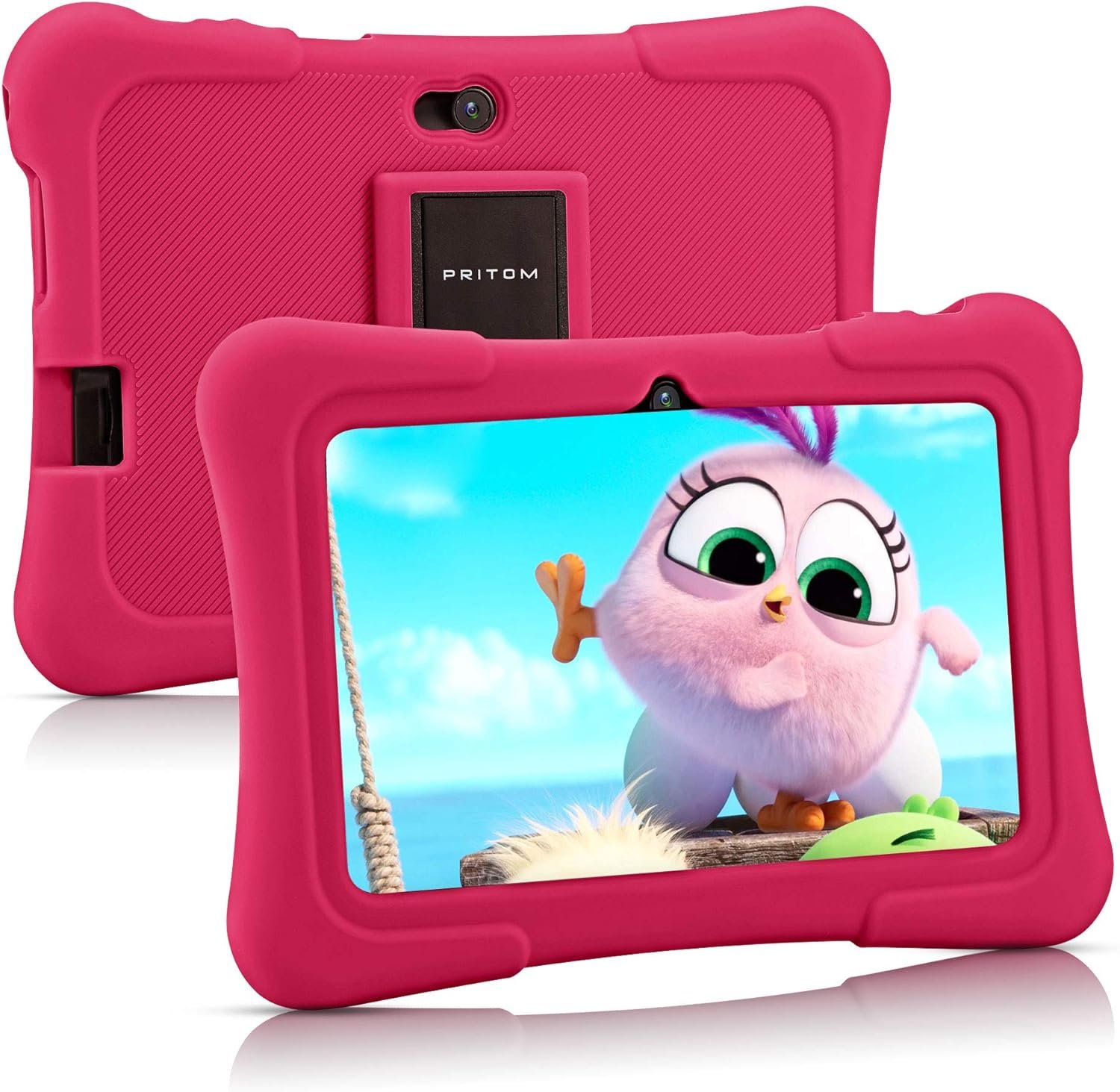
In 2026, the demand for kid-friendly tablets has surged as families seek devices that balance entertainment, education, and safety. A high-quality kids tablet can transform screen time into valuable learning experiences while ensuring parental oversight. For households with children aged 2-12, selecting the right device involves evaluating features like educational software, parental controls, hardware durability, and ecosystem compatibility. The Pritom K7 Kids Tablet positions itself as a budget-friendly option with built-in educational apps, a 7-inch display, and a kid-proof case. However, its value depends on how well it meets the needs of modern parents and children who expect seamless integration with popular platforms like YouTube, Google Play, and Alexa. This review analyzes the K7’s strengths and limitations, helping buyers determine if it aligns with their priorities for digital learning and entertainment.
Quick Overview
| Feature | Details |
|---|---|
| Device Category | 7-inch Kids Tablet |
| Core Features | Android 13 OS, 32 GB storage, WiFi, Bluetooth, dual camera |
| Voice Assistant Support | No built-in Alexa or Google Assistant |
| Connectivity | 802.11b/g/n WiFi, Bluetooth 4.2 |
| Ecosystem Compatibility | Google Play Store, YouTube, and basic Alexa integration |
| Intended Users | Parents seeking educational content for children aged 2-12 |
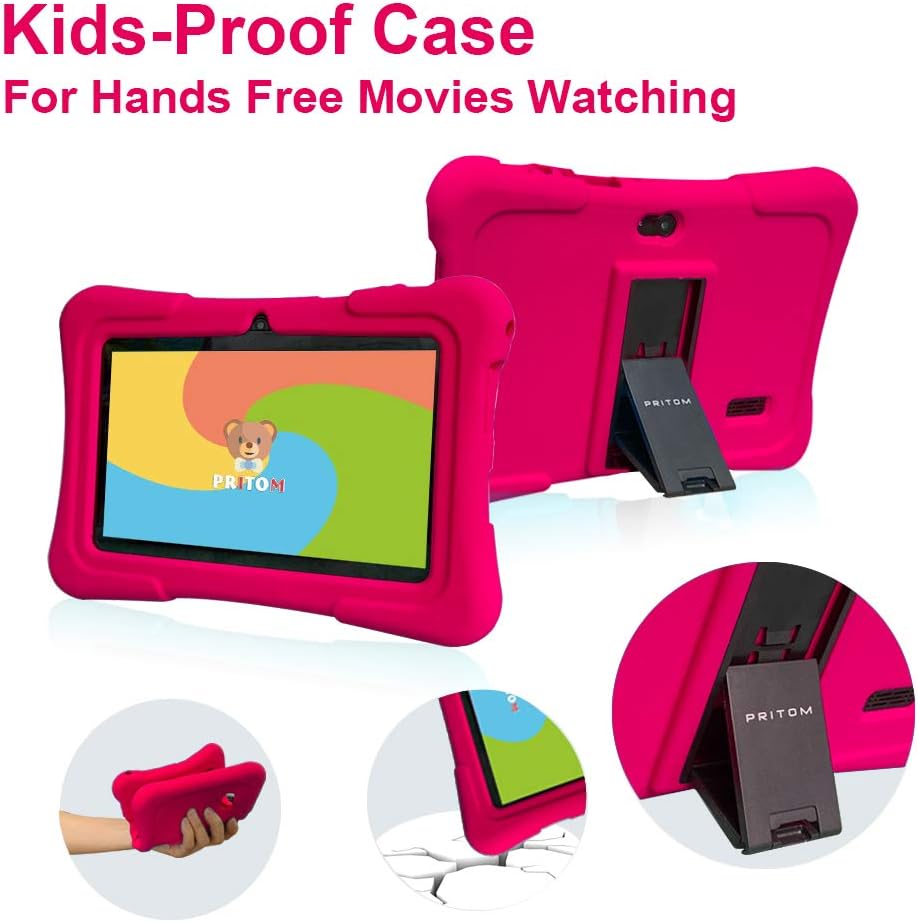
| Durability | Kid-proof silicone case with stand function |
The Pritom K7’s combination of educational software, parental controls, and a durable case makes it suitable for children who need structured screen time. However, its lack of voice assistant integration and limited storage expansion may affect its appeal for users prioritizing smart home connectivity or advanced data management.

Educational Value: Learning Through Play
The Pritom K7’s primary appeal lies in its pre-installed educational software and curated content for children. The device comes with a suite of kid-friendly apps designed to teach basic concepts like colors, shapes, and numbers. These apps are organized into age-appropriate categories, allowing parents to filter content based on developmental stages. The tablet’s 1024×600 IPS display ensures clear visuals, which is essential for young learners who rely on bright, high-contrast images to engage with educational material. However, the absence of a built-in voice assistant means children cannot interact with the device through spoken commands, limiting its ability to support interactive learning experiences. Additionally, while the 32 GB storage capacity is sufficient for basic apps and media, the lack of cloud storage options may hinder long-term content management.

Content Curation and Age Appropriateness
The K7’s educational apps are designed for children aged 2-12, with content categorized by age groups to ensure appropriate difficulty levels. Parents can access a library of pre-installed apps that focus on early literacy, math, and science, all of which align with common educational standards. The tablet’s parental controls allow users to set time limits for specific apps, ensuring children do not exceed recommended screen time. However, the absence of a dedicated learning mode means some apps may not be optimized for educational use, potentially reducing their effectiveness as learning tools.
Integration with External Educational Platforms
While the K7 does not support direct integration with educational platforms like Khan Academy or Duolingo, its compatibility with the Google Play Store allows access to a wide range of apps. Parents can download additional learning resources to supplement the pre-installed content. The tablet’s WiFi connectivity ensures smooth streaming of educational videos, though the lack of a built-in voice assistant may limit its ability to support interactive learning experiences. For families who prioritize structured educational content, the K7’s curated apps provide a solid foundation, though they may not replace more advanced learning tools.
Parental Controls: Balancing Freedom and Safety
The Pritom K7’s parental controls are a key feature for parents seeking to manage their children’s screen time and content access. The device includes app filters that block inappropriate websites and restrict access to certain applications. Parents can also set spending limits and game time restrictions, ensuring children do not exceed predefined usage thresholds. The tablet’s behavior monitoring tools analyze usage patterns, providing insights into how children interact with the device. However, the controls are somewhat limited compared to more advanced parental management systems, as they do not support granular filtering of specific content types or real-time monitoring of online activity.

Content Management and App Recommendations
The K7’s content management system allows parents to classify apps based on educational value and entertainment, making it easier to curate a balanced digital environment. The tablet’s app store includes a curated selection of kid-friendly titles, though the lack of a dedicated learning mode means some apps may not be optimized for educational use. Parents can also download additional apps from the Google Play Store, though the absence of a built-in voice assistant may complicate navigation for younger users. The device’s parental controls provide a reasonable level of oversight, though they may not fully replace more comprehensive digital safety solutions.
Behavioral Restrictions and User Settings
The K7’s behavioral restrictions include child locks, spending limits, and game time limits, all of which help prevent excessive screen time. The tablet’s user settings allow parents to customize the interface, adjusting themes and preferences to suit their children’s needs. However, the lack of advanced monitoring tools means parents cannot track real-time activity or receive notifications about specific app usage. The device’s simplicity makes it user-friendly for children, but it may not provide the level of control needed for more tech-savvy households.
Hardware and Performance: A Durable but Limited Device
The Pritom K7’s hardware is designed to withstand the rigors of daily use by children. The 7-inch display, while adequate for basic tasks, may feel small for extended viewing sessions. The quad-core processor and 2 GB of RAM ensure smooth performance for most educational and entertainment apps, though the device may struggle with more demanding applications. The 32 GB storage capacity is sufficient for basic use, but the lack of cloud storage options could limit long-term content management. The tablet’s battery life, while adequate for short sessions, may require frequent recharging for extended use.
Display and Touchscreen Responsiveness
The K7’s 1024×600 IPS display provides clear visuals, which is important for children who rely on bright, high-contrast images to engage with educational content. However, the screen size may feel cramped for older children, potentially leading to eye strain during prolonged use. The touchscreen is responsive for basic interactions, though the absence of a stylus may limit creative activities. The device’s durability is enhanced by the kid-proof silicone case, which protects against scratches and minor drops, though it does not provide complete protection against more severe impacts.
Connectivity and Storage Expansion
The K7 supports WiFi and Bluetooth connectivity, allowing seamless access to online content and peripherals like wireless keyboards. The device’s micro SD card slot enables storage expansion up to 512 GB, though the lack of cloud storage options may hinder long-term data management. The tablet’s average battery life of 3 years is a notable feature, though this likely refers to the battery’s expected lifespan rather than daily usage duration. For users who prioritize long-term reliability, the K7’s hardware may provide a cost-effective solution, though its performance may not match more advanced tablets.

Pros & Cons
Pros
- Educational Software Pre-Installed: The K7 comes with a suite of kid-friendly apps designed for learning and play, making it ideal for structured screen time.
- Parental Controls: The device includes app filters, spending limits, and time restrictions to help manage children’s digital habits.
- Durable Design: The kid-proof silicone case and impact-resistant material protect the tablet from scratches, drops, and dirt.
- Storage Expansion: The micro SD card slot allows storage expansion up to 512 GB, accommodating additional apps and media.
- Compatibility with Google Services: The tablet’s integration with the Google Play Store and YouTube provides access to a wide range of educational and entertainment content.
- User-Friendly Interface: The simplified interface is easy for children to navigate, ensuring a smooth learning and entertainment experience.
Cons
- Lack of Voice Assistant Integration: The absence of built-in Alexa or Google Assistant limits interactive learning and voice-activated commands.
- Limited Storage Capacity: While the 32 GB storage is sufficient for basic use, the lack of cloud storage options may hinder long-term content management.
- Basic Connectivity Features: The device supports WiFi and Bluetooth, but it lacks advanced connectivity options like 5G or Wi-Fi 6.
- Screen Size Limitations: The 7-inch display may feel small for older children, potentially leading to eye strain during extended use.
- Performance Constraints: The 2 GB of RAM and quad-core processor may struggle with more demanding apps, limiting the device’s versatility.
Final Verdict: Who This Device Is Best For (and Who Should Skip It)
The Pritom K7 Kids Tablet is best suited for parents seeking a budget-friendly device that provides structured educational content and basic entertainment for children aged 2-12. Its pre-installed apps, parental controls, and durable design make it a practical choice for families who prioritize simplicity and affordability over advanced features. However, the device may not be ideal for users who require voice assistant integration, cloud storage options, or more robust hardware for demanding applications. For households that value a balance between educational value and cost-effectiveness, the K7 offers a viable solution. Conversely, users who prioritize advanced connectivity, extended storage, or more powerful performance may find the K7 lacking in key areas.

Frequently Asked Questions (FAQs)
Does the Pritom K7 Kids Tablet include educational apps?
Yes, the Pritom K7 comes with a suite of pre-installed educational apps designed for children aged 2-12, focusing on early literacy, math, and science. Parents can also download additional apps from the Google Play Store.
Can I expand the storage on the Pritom K7?
The Pritom K7 supports storage expansion via a micro SD card slot, allowing up to 512 GB of additional storage for photos, music, and videos.
What parental controls are available on the Pritom K7?
The tablet includes app filters, spending limits, game time restrictions, and content management tools to help parents monitor and manage their child’s digital activity.
Is the Pritom K7 compatible with Google services?
Yes, the K7 is compatible with the Google Play Store and YouTube, providing access to a wide range of educational and entertainment content.
How durable is the Pritom K7 tablet?
The K7 features a kid-proof silicone case made of impact-resistant material, protecting the device from scratches, drops, and minor impacts.
What is the screen size and resolution of the Pritom K7?
The Pritom K7 has a 7-inch IPS HD display with a resolution of 1024×600 pixels, providing clear visuals for educational and entertainment content.
Can the Pritom K7 be used with voice assistants?
The Pritom K7 does not include built-in support for Alexa or Google Assistant, limiting its ability to interact through voice commands.
What is the battery life of the Pritom K7?
The tablet’s average battery life is rated for 3 years, though this refers to the battery’s expected lifespan rather than daily usage duration.